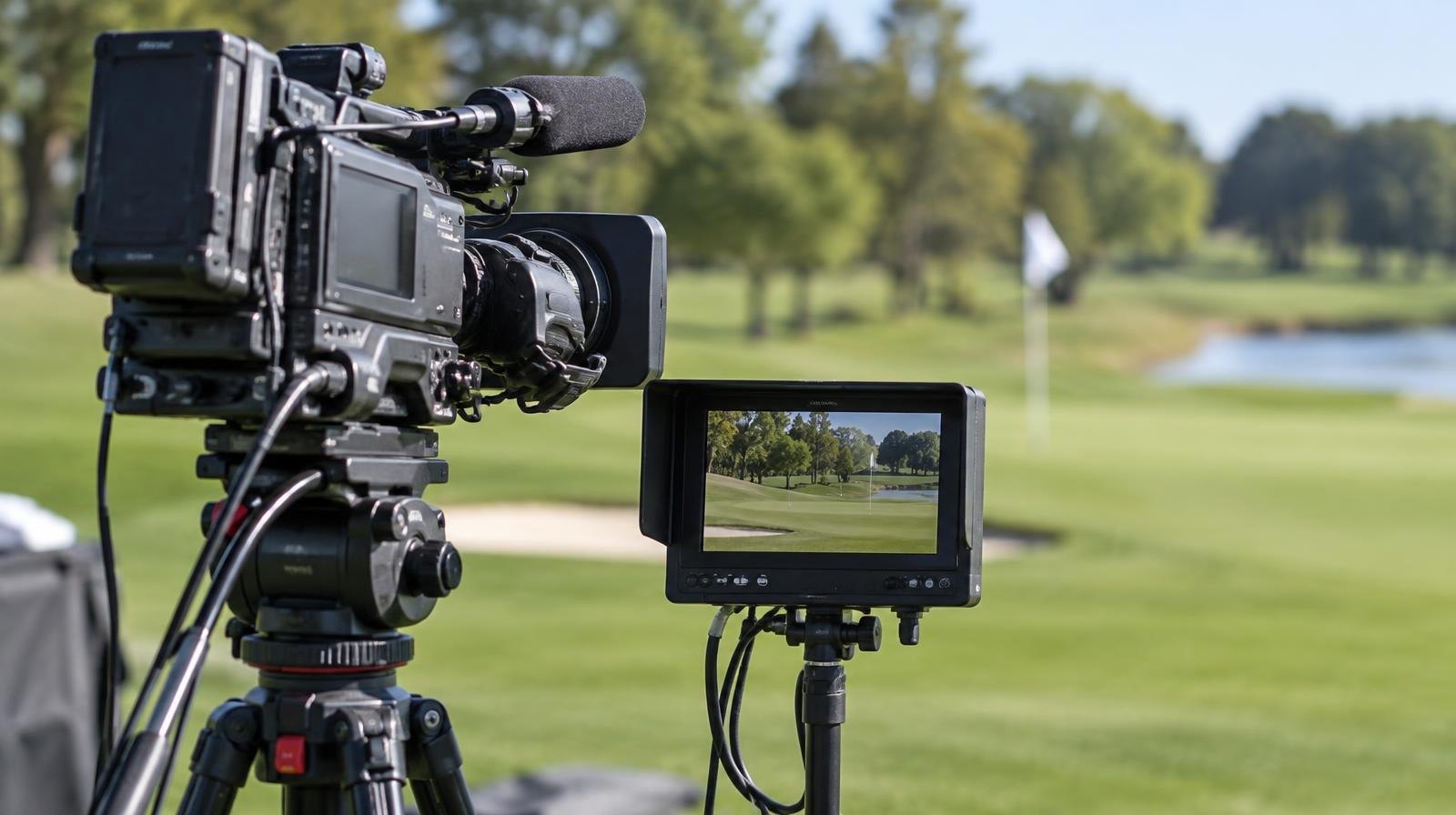
The PGA Tour's 165,000-square-foot broadcast facility in Ponte Vedra Beach, Florida, is using artificial intelligence and automation to run live golf coverage with minimal staff in the control room.
Michael Raimondo, vice president of broadcast technology at the PGA Tour, described the shift in an interview with Sports Video Group published Monday. Raimondo spoke at the 2026 SVG Remote Production Forum in Atlanta, reflecting on the first two years of operations at PGA Tour Studios, which opened in January 2025 on the PGA Tour campus at 100 PGA Tour Blvd.
Ball-tracking data now directs the broadcast
At the heart of the system is what the tour calls "agentic production." It draws real-time data from ShotLink, the tour's ball-tracking technology, and relies on application programming interfaces, or APIs, to launch on-screen graphics and change camera angles on dedicated live streams, all without a human operator at the switcher. Raimondo said a single hole can stay on air for about 10 hours a day with little hands-on involvement.
He told Sports Video Group that the PGA Tour plans to push the concept further with AI-assisted multicamera shot selection, letting software help choose which angle viewers see at any given moment.
Amazon tools filter profanity on live audio
The studio also relies on transcription tools powered by Amazon Web Services. One new system listens for profanity on live audio and automatically switches to a clean channel. Raimondo said the tour is exploring AWS-based speech recognition for sponsorship identification, metadata tagging and archive search.
One hub for the tour's global output
All of those automated workflows feed a massive operation. PGA Tour Studios houses the tour's entire media footprint, including live production of PGA Tour Champions, the Korn Ferry Tour and over 4,000 hours of PGA Tour Live on ESPN+, along with more than 50 digital and social media platforms, according to a July 2026 PGA Tour press release. The facility's World Feed reaches more than 200 countries and territories in 30 languages through 39 broadcast and digital partners.
The building, first conceptualized in 2017, was designed around SMPTE ST 2110, a Society of Motion Picture and Television Engineers standard for sending video, audio and data over internet networks instead of traditional cables. That infrastructure lets the tour centralize production in Ponte Vedra Beach rather than dispatch full crews to every tournament site, according to Raimondo.


.jpg)