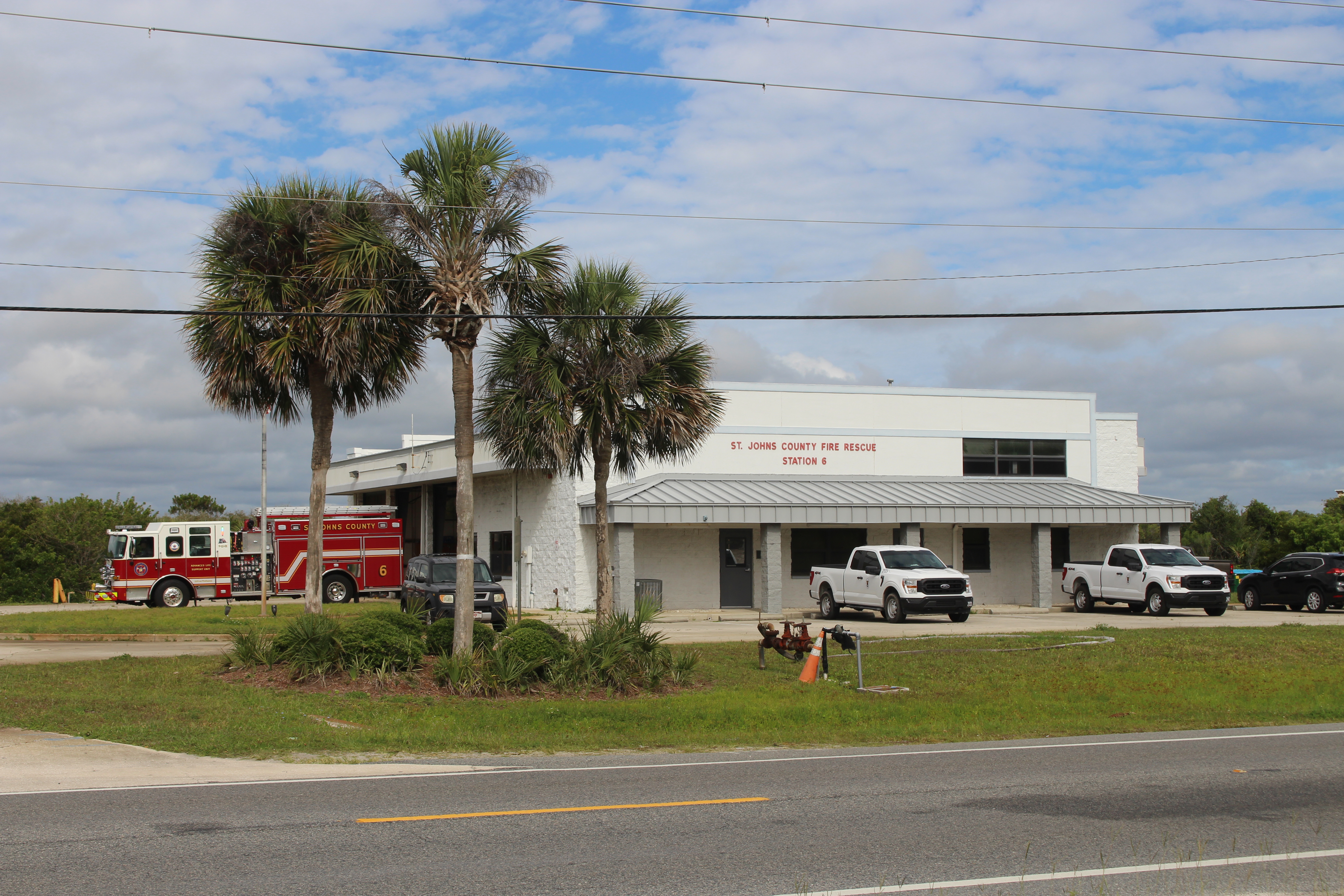
St. Johns County could lose $68.3 million in property tax revenue in fiscal year 2028 after Florida voters approved Amendment 3 on Nov. 3. That money funds firefighters, paramedics and deputies who respond to 911 calls.
As we reported Nov. 4, the amendment passed statewide with about 62% support. St. Johns County voters backed it by an even wider margin, roughly 65%, according to unofficial results.
The amendment increases the standard homestead exemption on nonschool property taxes to $150,000 beginning Jan. 1, 2027, and to $250,000 beginning Jan. 1, 2028, according to Jax Daily Record reporting on a Sept. 29 county town hall. The current exemption is about $51,000.
Property taxes pay for most of what happens when someone calls 911, Action News Jax reported. State economists estimate the amendment could cost local governments up to $12 billion a year statewide.
What St. Johns County stands to lose
County Administrator Joy Andrews laid out the projected revenue losses at the September town hall. Based on Florida Office of Economic and Demographic Research projections, St. Johns County faces estimated reductions of $68.3 million in FY 2028, $136.1 million in FY 2029 and $191.6 million by FY 2032, according to Jax Daily Record. The cumulative five-year loss could exceed $700 million.
St. Johns County collects about $426 million in property taxes annually through its general fund, fire district and transportation trust fund, Andrews said at the town hall.
The first-year reduction would equal about 16% of current property tax revenue. That figure rises to about 32% in the second year.
County preparations already underway
The county began preparing in May, according to a St. Johns County government page published in September. About $100 million in capital improvement projects have been placed on hold. Approximately $8.6 million in positions and vacant-position funding has been identified for reassessment, with exceptions for public safety, legal requirements and grant-funded positions.
The county's FY 2027 recommended budget includes $31.2 million in emergency response reserves and an additional $30 million in General Fund reserves designated for financial resiliency. Those are one-time resources, Andrews noted, and would not replace recurring property tax revenue.
Wade Schroeder, the county's director of the Office of Management and Budget, cautioned against assuming the county can absorb the loss elsewhere. Revenue from utilities, solid waste assessments and services such as the county's golf course and pier operations cannot simply be redirected to replace property tax dollars, he said.
Fire stations, staffing at stake across the region
Across Northeast Florida, first responders are weighing what the amendment means for their operations. Local commissioner Matt Carlucci told Action News Jax that leaders face difficult choices.
"There's less money, then you can't build certain fire stations, you can't build certain infrastructure improvements," Carlucci said.
Kelly Dobson, president of the Jacksonville Association of Firefighters, raised concerns about layoffs and equipment purchases. "Do you have to lay people off? Do you not order equipment?" Dobson said.
The amendment requires counties to spend property tax money on public safety but does not specify how much, Action News Jax reported. No state money is built in to replace what counties lose.
Sheriff's Office has not responded
First Coast News reported it contacted the St. Johns County Sheriff's Office but had not received a response by its Nov. 5 publication.
The property tax changes take effect Jan. 1, 2027. Homeowners will first see them on next year's tax bills.
Residents can find information about the amendment's projected effects on St. Johns County at sjcfl.us/amendment-3.